Tape workflow support note
Shared Supply Cabinet Setup
This supporting guide focuses on storing tape dispensers so coworkers can find and return them.
What to check first
A tape dispenser is one of those office tools people only notice when it fails. If it skids across the desk, tears unevenly, or never has the right refill nearby, tiny tasks start taking longer than they should. The best dispenser is not just a heavy object on a desk; it is part of a small workflow for wrapping, labeling, mail prep, and quick repairs.
For shared supply cabinet setup, the practical test is whether the dispenser makes a repeated office action easier to complete and easier to reset. People should know where the tape lives, which roll fits, how to tear a clean strip, and who replaces the roll before the station is empty.
A useful tape station also removes small decision points. Keep the most common roll installed, place specialty rolls nearby, and label any dispenser that uses a different core size. Those details are not glamorous, but they keep mail prep, quick labels, and desk repairs moving without a hunt through the supply cabinet.
Office efficiency depends on reducing little pauses. A stable dispenser lets someone pull tape with one hand while holding a label, envelope, or package with the other. A poor dispenser forces people to hunt for scissors, peel tape with fingernails, or abandon the roll in a drawer where the end disappears.
For shared supply cabinet setup, the practical test is whether the dispenser makes a repeated office action easier to complete and easier to reset. People should know where the tape lives, which roll fits, how to tear a clean strip, and who replaces the roll before the station is empty.
A useful tape station also removes small decision points. Keep the most common roll installed, place specialty rolls nearby, and label any dispenser that uses a different core size. Those details are not glamorous, but they keep mail prep, quick labels, and desk repairs moving without a hunt through the supply cabinet.
Refill fit matters because offices often stock several tape types at once. Standard transparent tape, writable tape, removable tape, painter-style labels, and packing tape may all live near the same supply area. A dispenser should match the rolls used weekly, not a roll size that looked convenient during one purchase.
For shared supply cabinet setup, the practical test is whether the dispenser makes a repeated office action easier to complete and easier to reset. People should know where the tape lives, which roll fits, how to tear a clean strip, and who replaces the roll before the station is empty.
A useful tape station also removes small decision points. Keep the most common roll installed, place specialty rolls nearby, and label any dispenser that uses a different core size. Those details are not glamorous, but they keep mail prep, quick labels, and desk repairs moving without a hunt through the supply cabinet.
Cut quality changes the user experience. A clean edge makes labels and envelopes look neater, while a rough tear can make packages feel rushed. In shared offices, the cutter should be effective but not intimidating, especially if the dispenser sits on a front desk, reception counter, classroom table, or supply cabinet.
For shared supply cabinet setup, the practical test is whether the dispenser makes a repeated office action easier to complete and easier to reset. People should know where the tape lives, which roll fits, how to tear a clean strip, and who replaces the roll before the station is empty.
A useful tape station also removes small decision points. Keep the most common roll installed, place specialty rolls nearby, and label any dispenser that uses a different core size. Those details are not glamorous, but they keep mail prep, quick labels, and desk repairs moving without a hunt through the supply cabinet.
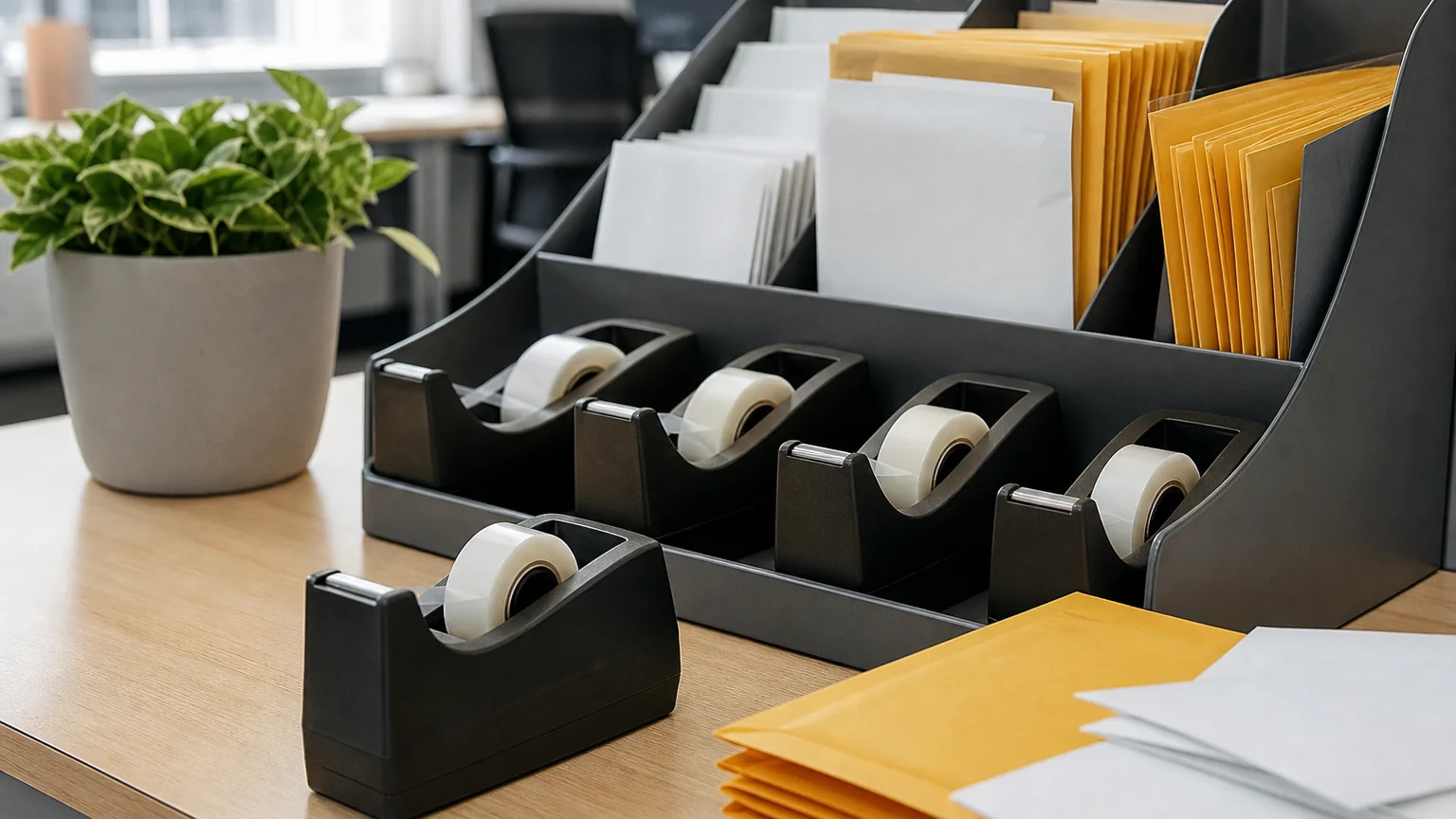
Placement is part of the decision. A personal desk may need a compact weighted dispenser. A mailroom may need several dispensers arranged by tape type. A packing station may need heavy-duty tape within arm’s reach of boxes, labels, and scissors. The best setup follows the movement of the work.
For shared supply cabinet setup, the practical test is whether the dispenser makes a repeated office action easier to complete and easier to reset. People should know where the tape lives, which roll fits, how to tear a clean strip, and who replaces the roll before the station is empty.
A useful tape station also removes small decision points. Keep the most common roll installed, place specialty rolls nearby, and label any dispenser that uses a different core size. Those details are not glamorous, but they keep mail prep, quick labels, and desk repairs moving without a hunt through the supply cabinet.
Maintenance is simple, but it keeps the tool useful. Adhesive buildup, dust, bent blades, missing cores, and empty rolls are small problems that make people stop using the station. A short weekly reset keeps the dispenser ready and prevents a supply corner from turning into a tangle of half-used rolls.
For shared supply cabinet setup, the practical test is whether the dispenser makes a repeated office action easier to complete and easier to reset. People should know where the tape lives, which roll fits, how to tear a clean strip, and who replaces the roll before the station is empty.
A useful tape station also removes small decision points. Keep the most common roll installed, place specialty rolls nearby, and label any dispenser that uses a different core size. Those details are not glamorous, but they keep mail prep, quick labels, and desk repairs moving without a hunt through the supply cabinet.
Workflow planning notes
A tape dispenser is one of those office tools people only notice when it fails. If it skids across the desk, tears unevenly, or never has the right refill nearby, tiny tasks start taking longer than they should. The best dispenser is not just a heavy object on a desk; it is part of a small workflow for wrapping, labeling, mail prep, and quick repairs.
For tape dispenser shared supply cabinet setup, the practical test is whether the dispenser makes a repeated office action easier to complete and easier to reset. People should know where the tape lives, which roll fits, how to tear a clean strip, and who replaces the roll before the station is empty.
A useful tape station also removes small decision points. Keep the most common roll installed, place specialty rolls nearby, and label any dispenser that uses a different core size. Those details are not glamorous, but they keep mail prep, quick labels, and desk repairs moving without a hunt through the supply cabinet.
Office efficiency depends on reducing little pauses. A stable dispenser lets someone pull tape with one hand while holding a label, envelope, or package with the other. A poor dispenser forces people to hunt for scissors, peel tape with fingernails, or abandon the roll in a drawer where the end disappears.
For tape dispenser shared supply cabinet setup, the practical test is whether the dispenser makes a repeated office action easier to complete and easier to reset. People should know where the tape lives, which roll fits, how to tear a clean strip, and who replaces the roll before the station is empty.
A useful tape station also removes small decision points. Keep the most common roll installed, place specialty rolls nearby, and label any dispenser that uses a different core size. Those details are not glamorous, but they keep mail prep, quick labels, and desk repairs moving without a hunt through the supply cabinet.
Refill fit matters because offices often stock several tape types at once. Standard transparent tape, writable tape, removable tape, painter-style labels, and packing tape may all live near the same supply area. A dispenser should match the rolls used weekly, not a roll size that looked convenient during one purchase.
For tape dispenser shared supply cabinet setup, the practical test is whether the dispenser makes a repeated office action easier to complete and easier to reset. People should know where the tape lives, which roll fits, how to tear a clean strip, and who replaces the roll before the station is empty.
A useful tape station also removes small decision points. Keep the most common roll installed, place specialty rolls nearby, and label any dispenser that uses a different core size. Those details are not glamorous, but they keep mail prep, quick labels, and desk repairs moving without a hunt through the supply cabinet.
Cut quality changes the user experience. A clean edge makes labels and envelopes look neater, while a rough tear can make packages feel rushed. In shared offices, the cutter should be effective but not intimidating, especially if the dispenser sits on a front desk, reception counter, classroom table, or supply cabinet.
For tape dispenser shared supply cabinet setup, the practical test is whether the dispenser makes a repeated office action easier to complete and easier to reset. People should know where the tape lives, which roll fits, how to tear a clean strip, and who replaces the roll before the station is empty.
A useful tape station also removes small decision points. Keep the most common roll installed, place specialty rolls nearby, and label any dispenser that uses a different core size. Those details are not glamorous, but they keep mail prep, quick labels, and desk repairs moving without a hunt through the supply cabinet.
Placement is part of the decision. A personal desk may need a compact weighted dispenser. A mailroom may need several dispensers arranged by tape type. A packing station may need heavy-duty tape within arm’s reach of boxes, labels, and scissors. The best setup follows the movement of the work.
For tape dispenser shared supply cabinet setup, the practical test is whether the dispenser makes a repeated office action easier to complete and easier to reset. People should know where the tape lives, which roll fits, how to tear a clean strip, and who replaces the roll before the station is empty.
A useful tape station also removes small decision points. Keep the most common roll installed, place specialty rolls nearby, and label any dispenser that uses a different core size. Those details are not glamorous, but they keep mail prep, quick labels, and desk repairs moving without a hunt through the supply cabinet.
Maintenance is simple, but it keeps the tool useful. Adhesive buildup, dust, bent blades, missing cores, and empty rolls are small problems that make people stop using the station. A short weekly reset keeps the dispenser ready and prevents a supply corner from turning into a tangle of half-used rolls.
For tape dispenser shared supply cabinet setup, the practical test is whether the dispenser makes a repeated office action easier to complete and easier to reset. People should know where the tape lives, which roll fits, how to tear a clean strip, and who replaces the roll before the station is empty.
A useful tape station also removes small decision points. Keep the most common roll installed, place specialty rolls nearby, and label any dispenser that uses a different core size. Those details are not glamorous, but they keep mail prep, quick labels, and desk repairs moving without a hunt through the supply cabinet.
Return path
After this detail is clear, return to the main tape dispenser guide and compare products with your roll sizes, desk tasks, and shared-supply habits in mind.
Keep a simple note near the station with the refill width and the person or routine responsible for restocking. That keeps the dispenser from becoming another empty tool on a busy desk.