Running Costs, Paper Habits, and Refill Planning for Shared Printers
A simple supporting note for choosing, placing, and living with an all-in-one printer in a real workspace.
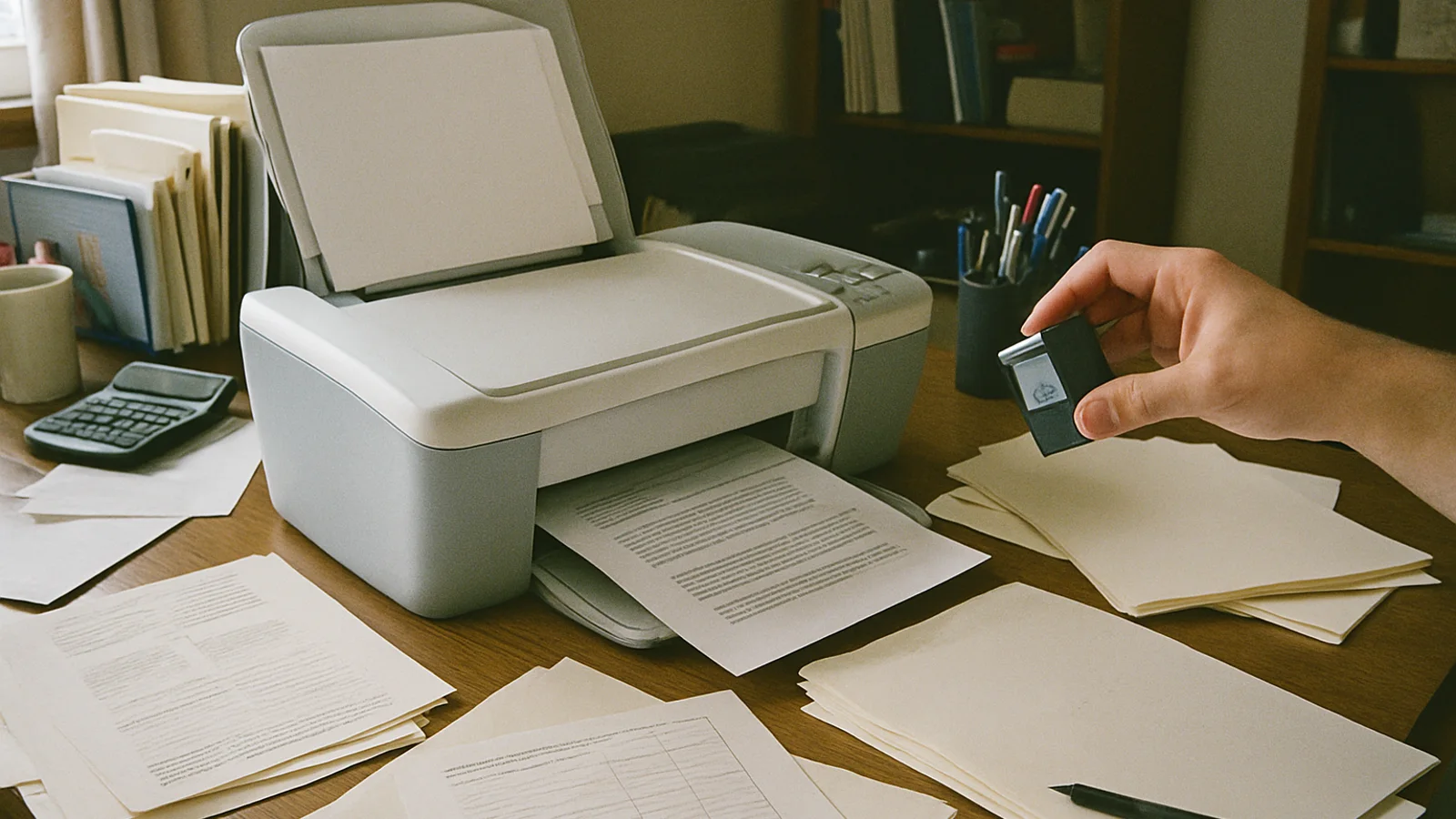
I like to begin running costs, paper habits, and refill planning for shared printers with the messy part of the desk, not the product page.
The most useful printer decision is usually made before anyone clicks buy: where will paper, scanning, and refills actually live?
In a small office scenario, the winning machine is the one people can use on a busy afternoon without calling the most technical person in the room.
1. Start with the work pattern
For running costs, paper habits, and refill planning for shared printers, I would write down the ordinary jobs first: shipping labels, school forms, invoices, signed pages, color handouts, and quick copies. That list tells you whether speed, duplex printing, an automatic document feeder, or cheaper black text pages should matter most.
A printer that looks compact online can feel awkward if the paper tray opens into a walkway or the scanner lid hits a shelf. Give the machine a real landing zone, keep a small stack of paper nearby, and leave enough room to lift the lid without moving half the desk.
2. Match paper handling to the room
For running costs, paper habits, and refill planning for shared printers, I would write down the ordinary jobs first: shipping labels, school forms, invoices, signed pages, color handouts, and quick copies. That list tells you whether speed, duplex printing, an automatic document feeder, or cheaper black text pages should matter most.
A printer that looks compact online can feel awkward if the paper tray opens into a walkway or the scanner lid hits a shelf. Give the machine a real landing zone, keep a small stack of paper nearby, and leave enough room to lift the lid without moving half the desk.
3. Make scanning boringly easy
For running costs, paper habits, and refill planning for shared printers, I would write down the ordinary jobs first: shipping labels, school forms, invoices, signed pages, color handouts, and quick copies. That list tells you whether speed, duplex printing, an automatic document feeder, or cheaper black text pages should matter most.
A printer that looks compact online can feel awkward if the paper tray opens into a walkway or the scanner lid hits a shelf. Give the machine a real landing zone, keep a small stack of paper nearby, and leave enough room to lift the lid without moving half the desk.
4. Plan supplies before the first low-ink warning
For running costs, paper habits, and refill planning for shared printers, I would write down the ordinary jobs first: shipping labels, school forms, invoices, signed pages, color handouts, and quick copies. That list tells you whether speed, duplex printing, an automatic document feeder, or cheaper black text pages should matter most.
A printer that looks compact online can feel awkward if the paper tray opens into a walkway or the scanner lid hits a shelf. Give the machine a real landing zone, keep a small stack of paper nearby, and leave enough room to lift the lid without moving half the desk.
5. Set up a shared routine
For running costs, paper habits, and refill planning for shared printers, I would write down the ordinary jobs first: shipping labels, school forms, invoices, signed pages, color handouts, and quick copies. That list tells you whether speed, duplex printing, an automatic document feeder, or cheaper black text pages should matter most.
A printer that looks compact online can feel awkward if the paper tray opens into a walkway or the scanner lid hits a shelf. Give the machine a real landing zone, keep a small stack of paper nearby, and leave enough room to lift the lid without moving half the desk.
6. Mistakes worth avoiding
For running costs, paper habits, and refill planning for shared printers, I would write down the ordinary jobs first: shipping labels, school forms, invoices, signed pages, color handouts, and quick copies. That list tells you whether speed, duplex printing, an automatic document feeder, or cheaper black text pages should matter most.
A printer that looks compact online can feel awkward if the paper tray opens into a walkway or the scanner lid hits a shelf. Give the machine a real landing zone, keep a small stack of paper nearby, and leave enough room to lift the lid without moving half the desk.
7. A practical buying checklist
For running costs, paper habits, and refill planning for shared printers, I would write down the ordinary jobs first: shipping labels, school forms, invoices, signed pages, color handouts, and quick copies. That list tells you whether speed, duplex printing, an automatic document feeder, or cheaper black text pages should matter most.
A printer that looks compact online can feel awkward if the paper tray opens into a walkway or the scanner lid hits a shelf. Give the machine a real landing zone, keep a small stack of paper nearby, and leave enough room to lift the lid without moving half the desk.
Bottom line
The calmer choice is rarely the flashiest model. It is the one that fits the room, keeps refills simple, scans the documents you actually handle, and stays easy enough that everyone in the workspace can use it correctly.
FAQ
Is an all-in-one printer worth it for a home office?
It can be, especially when scanning and copying matter as much as printing. The best fit depends on monthly volume, refill costs, desk space, and wireless reliability.
Should I choose inkjet or laser?
Inkjet suits color documents and occasional photos, while laser often feels steadier for heavy black-and-white office pages.
What features matter most?
Look at automatic document feeding, duplex printing, mobile app reliability, refill availability, paper tray size, and real placement space.
How do I avoid Wi-Fi printer problems?
Keep the printer near a strong router signal, avoid cramped metal shelving, update firmware when prompted, and keep a simple USB fallback if the printer supports it.
Do cheap printers cost more later?
Sometimes. Low upfront prices can be offset by smaller cartridges, refill friction, or paper-handling limits.
What should a small office check first?
Start with print volume, scan volume, who will refill supplies, where paper will live, and whether color printing is truly needed.
Keep the main printer shortlist nearby
Use the main all-in-one printer desk guide as the hub when you compare models, running costs, and placement needs.